MAVRIČNI GLAS 2026 – Slovenian Parliamentary Elections

MAVRIČNI GLAS
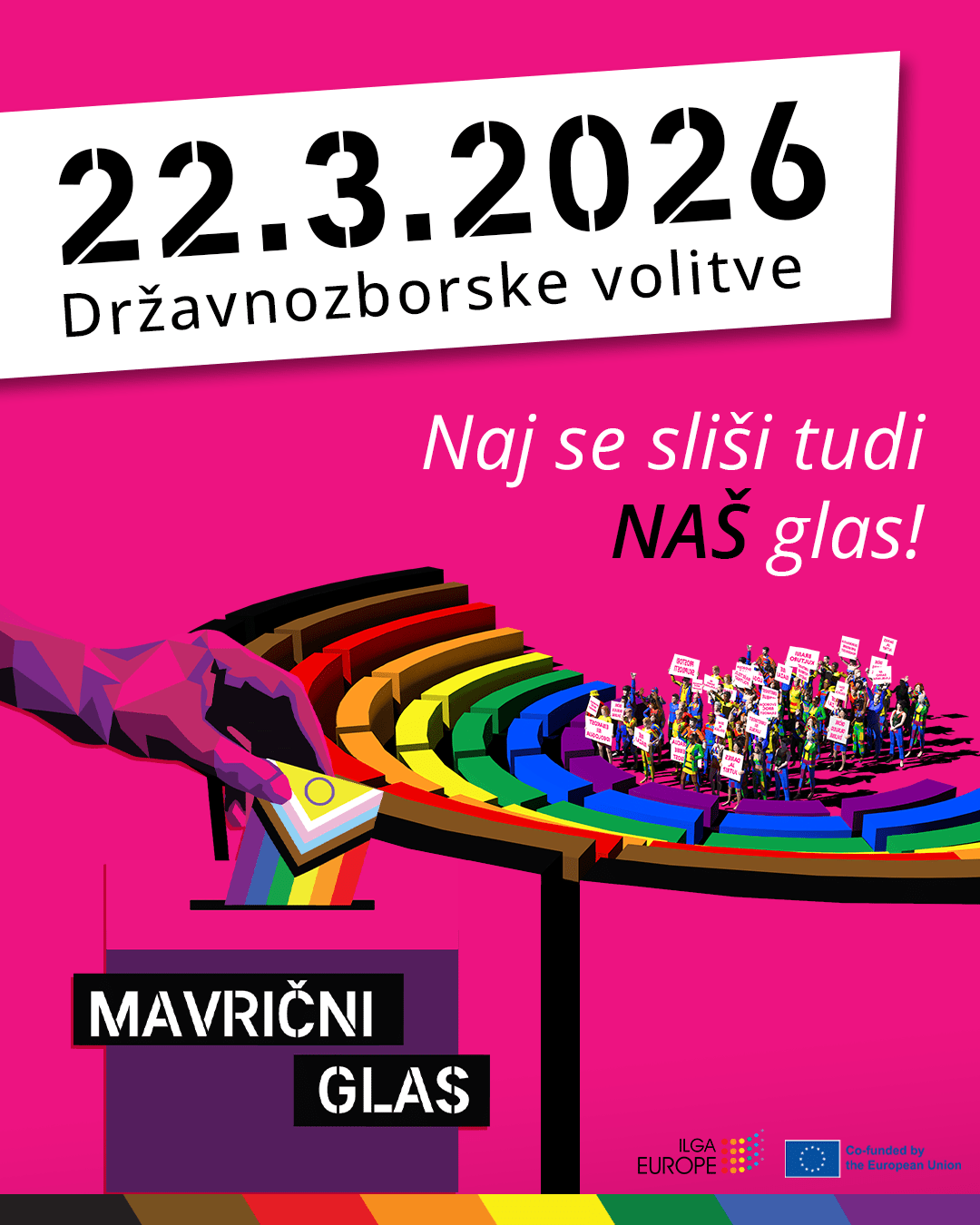
Rainbow Voice is an initiative of Ljubljana Pride created to inform and support young voters in actively engaging in elections.
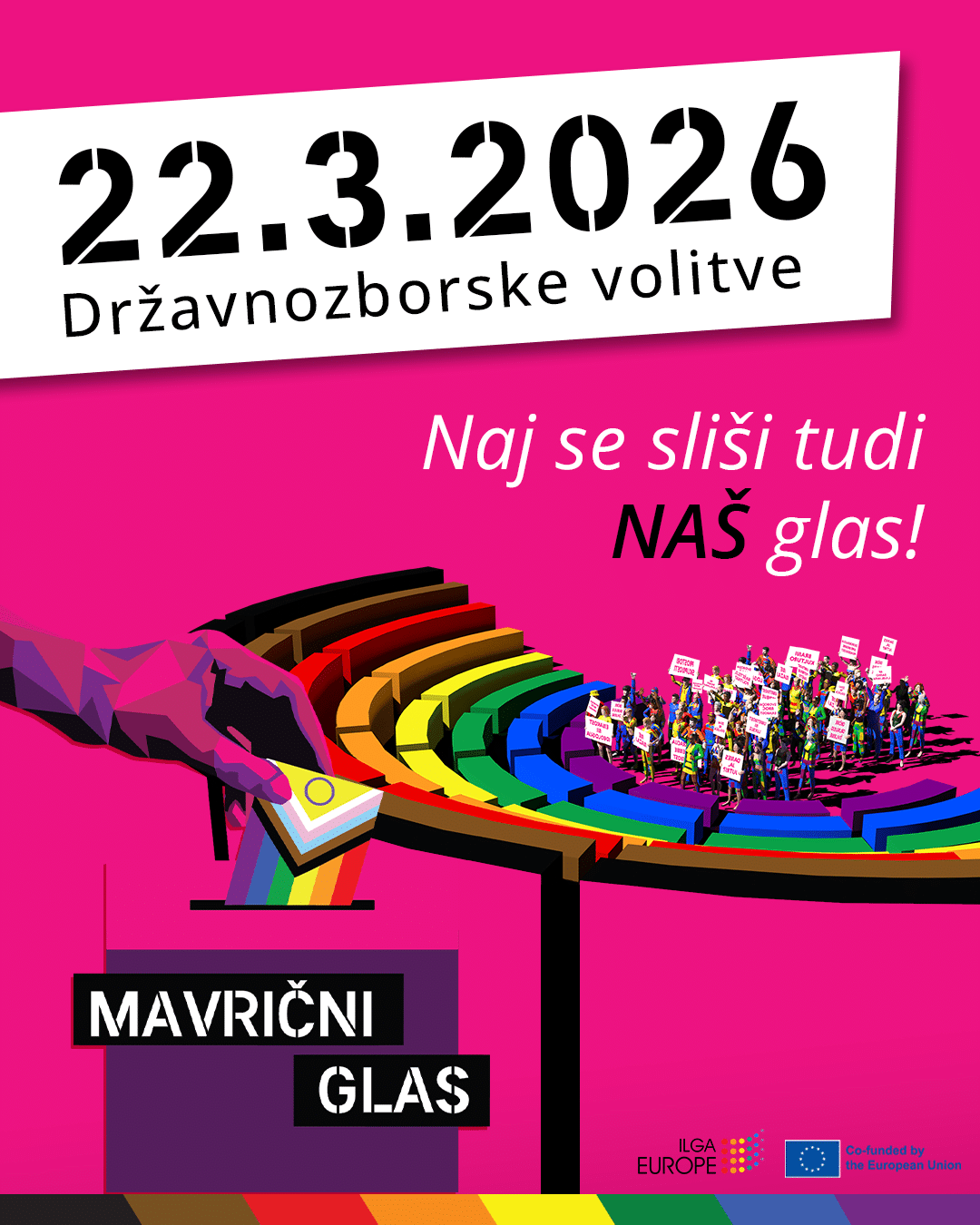
On 22 March 2026, the 11th elections to the National Assembly of the Republic of Slovenia will take place. Our goal remains clear – to make elections and their importance more accessible to voters and to highlight their direct and indirect impact on the lives of LGBTIQ+ people.
Parliamentary elections determine the laws that shape our lives – from protection against discrimination, access to healthcare, social security and education to freedom of expression and the right to live with dignity. The composition of the National Assembly directly influences whether our rights will be protected, strengthened or put at risk.
Don’t stay silent.
Vote on 22 March 2026 and make a difference.
Elections to the National Assembly of the Republic of Slovenia are held every four years.
The next, 11th elections to the National Assembly of the Republic of Slovenia, will take place on 22 March 2026. At these elections, we will elect Members of Parliament who will represent the citizens of the Republic of Slovenia during the next parliamentary term and make decisions on legislation and the country’s key policy directions.
Parliamentary elections are important for several reasons:
1. They allow citizens to directly express their political will and choose representatives of the legislative branch. The National Assembly is the highest legislative body in the Republic of Slovenia – it adopts laws, oversees the work of the government, and makes decisions on key social, economic and political issues. By voting, we help shape the country’s direction of development and influence the legal and political framework that determines our everyday lives.
2. Elected Members of Parliament make decisions on a wide range of issues, including human rights, social security, healthcare, education, labour legislation, protection against discrimination, tax policy, housing policy, security, and the position of vulnerable groups. Elections give us the opportunity to choose representatives who will advocate for the values and policies we support – including in the area of LGBTIQ+ rights.
3. The National Assembly elects the Prime Minister and confirms the ministers. In this way, it directly influences the composition of the executive branch and who will lead the country during the next term. A balanced and accountable parliament is essential for democracy, as it ensures oversight of the government and helps prevent the concentration of power.
4. The National Assembly also makes decisions that shape Slovenia’s responses to international and global challenges – from climate change, economic stability and social cohesion to migration, security and respect for international law.
On 22 March 2026, we decide the direction of our country.
Our rights, safety and dignity cannot be taken for granted.
That is why participating in elections is an act of responsibility – to ourselves, to our community and to the future.
PODCAST: NA MAVRIČNEM KAVČU
ON THE RAINBOW COUCH:
Edi Klobučar
In the first episode, we talk about elections, political responsibility, and why the LGBTIQ+ community cannot afford to remain silent. Non-participation is not resistance.
ON THE RAINBOW COUCH:
Simon Maljevac
In the second episode, we talk about the responsibility of those in power, the welfare state, and solidarity in practice – and how to ensure inclusive support for everyone, including LGBTIQ+ people.
ON THE RAINBOW COUCH:
Aleksander Prosen
In the third episode, we talk about an LGBTIQ+ strategy, the experiences of queer people in politics, and the importance of inclusion and youth mobilisation.
WHAT ARE ELECTIONS?
In modern constitutional systems, the right to vote is one of the fundamental political rights belonging to every citizen. The Constitution of the Republic of Slovenia also clearly emphasises this, highlighting the principles of universal and equal suffrage. Universal suffrage means that every adult citizen has the right to vote and to stand for election. Equal suffrage means that every voter’s vote has the same value and that every voter has one vote.
Electoral legislation guarantees voters the right to make a genuinely free choice among candidates, meaning that no one can be forced to vote for anyone.
In Slovenia, the right to vote is held by citizens of the Republic of Slovenia with permanent residence in Slovenia, EU citizens with permanent residence in Slovenia, and citizens of the Republic of Slovenia who do not have permanent residence in Slovenia.
WHY IS IT IMPORTANT TO VOTE?
1. Every vote is part of a collective act
Although a single vote rarely determines an election, democracy only works when enough people participate. Voting is an individual’s contribution to the collective political process.
2. Democracy needs active citizens
Political decisions affect society as a whole. Participating in elections means taking on part of the responsibility for collective decisions.
3. Collective participation can prevent harmful decisions
Major social problems can only be prevented when many people participate. Voting is one of the most important ways in which citizens can influence the direction of society.
4. Voting is an expression of civic responsibility
Although people sometimes have valid reasons for feeling that their vote will not make much difference, participating in elections is an important part of responsible citizenship
HOW TO VOTE IN SLOVENIA?
Slovenia has a parliamentary democracy, which means that parliament plays a central role in the political system. The Slovenian Parliament consists of the National Assembly and the National Council, which has a supervisory role and is not directly elected. All laws are adopted in parliament, while Members of Parliament elect the Prime Minister and confirm all ministers. They can also express a vote of no confidence in the government and remove it from office. Parliament also appoints Constitutional Court and Supreme Court judges, as well as other key public officials. With a two-thirds majority, Parliament can also amend the Constitution, which is the highest legal act of any country.
We can therefore say that elections to the National Assembly – taking place on 22 March – are the most important of all elections, because we elect representatives who directly make decisions about other positions of power and about our future, including by changing legislation.
Slovenia has a proportional electoral system. This means that the share of seats a party wins in the National Assembly corresponds to the share of votes it receives in parliamentary elections. The minimum share of votes a party must receive to enter the National Assembly is 4 percent. Voters in 8 electoral units, each divided into 11 electoral districts, elect 88 Members of Parliament. One additional Member of Parliament is elected by each of the Italian and Hungarian national communities in Slovenia. There are therefore 90 Members of Parliament in total.
Because of the electoral system, it is highly unlikely that any single party will win a majority of seats in the National Assembly on its own. After the elections, parties therefore form a coalition that holds a majority, which means it can form a government and pass legislation. The Prime Minister usually comes from the largest party in the governing coalition. However, it can happen – and has happened – that the party receiving the most votes and “winning” the election is unable to form a coalition and therefore does not take over the government. What matters, then, is not which party wins the election, but which alliance of parties holds a majority in the National Assembly.
Voting is easy and quick. All you need is an identity document (ID card, driving licence or passport). You will receive a ballot paper listing the parties you can vote for. Circle the number next to the party you want to vote for. Fold the ballot paper and place it in the ballot box.

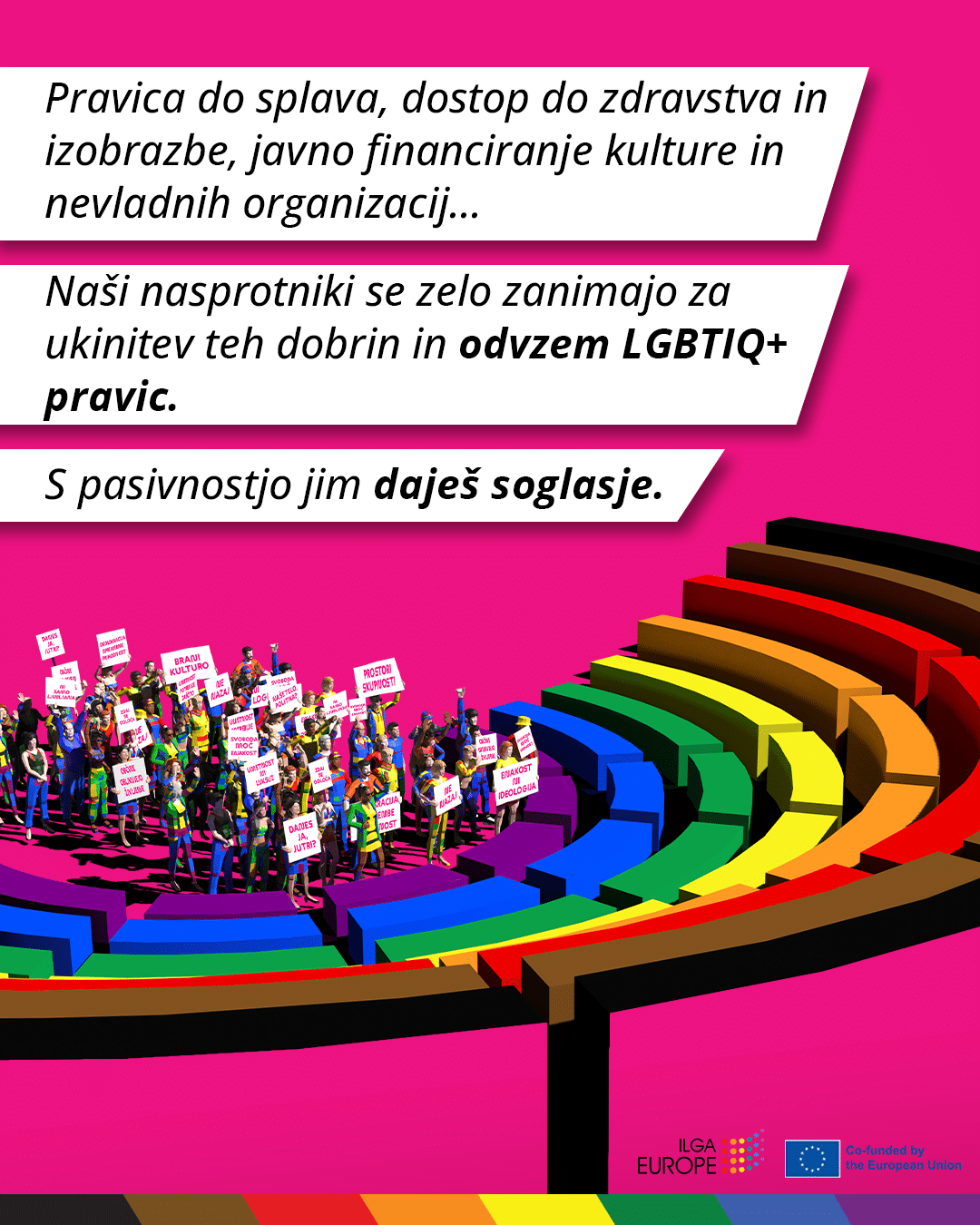
COMMON EXCUSES – AND THE ANSWERS
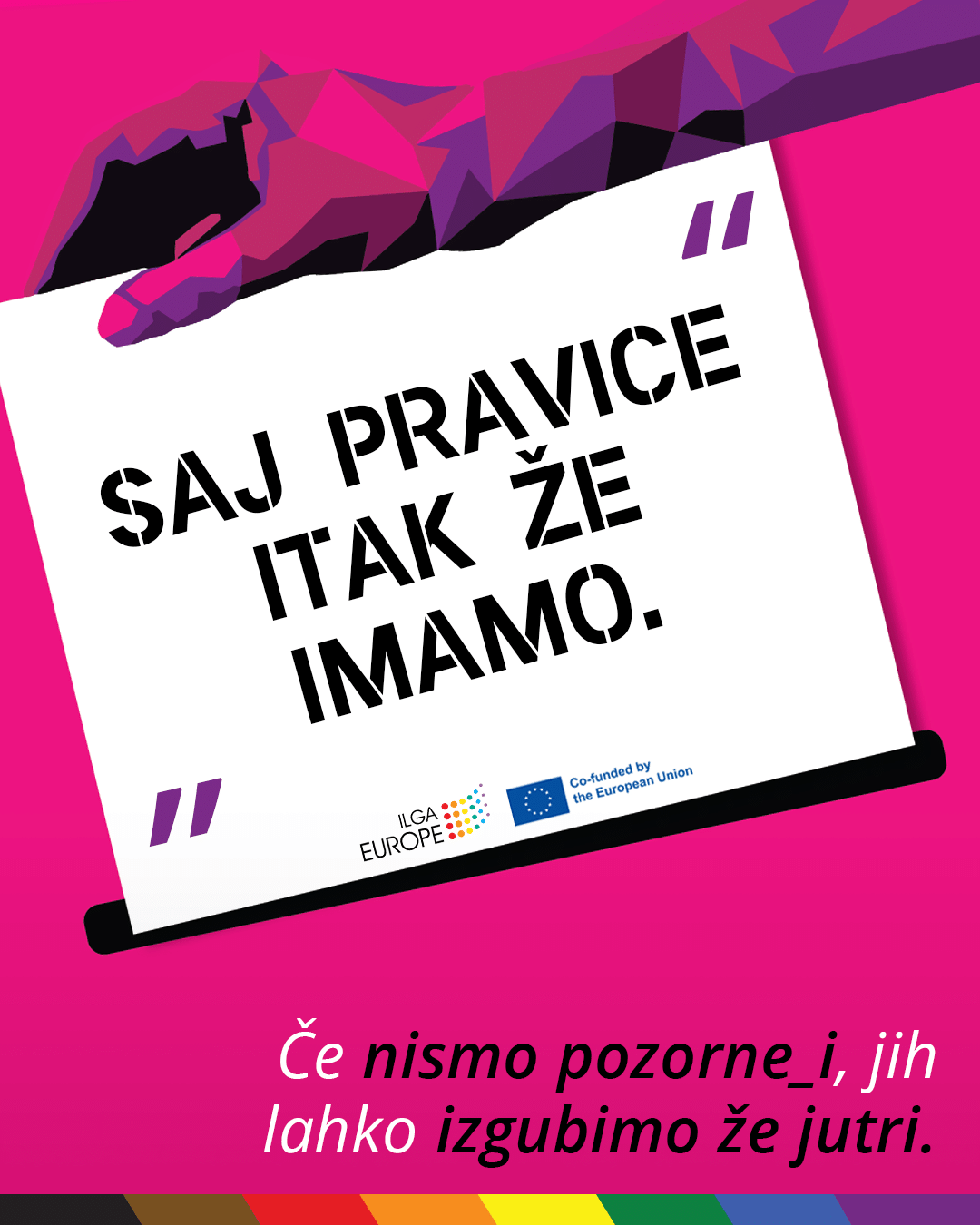
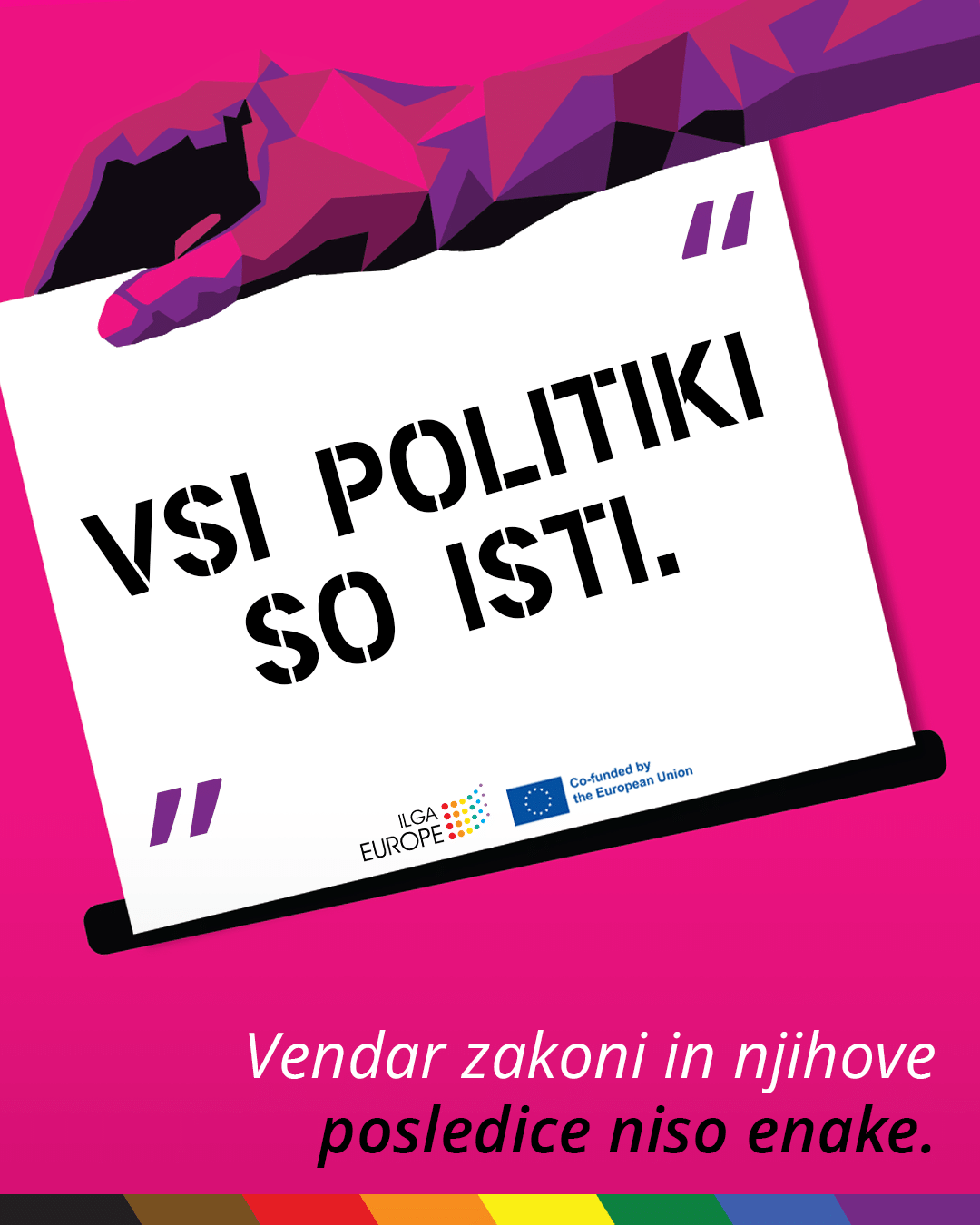
“They’re all the same. / I don’t like any of them.”
That’s simply not true. Political parties have very different programmes and different visions of what Slovenia should look like in the future. We can assure you that some will be closer to your views than others.
“My vote won’t make any difference anyway.”
Every voter has just one vote. Your vote carries the same weight as everyone else’s. And here’s something important: if you don’t vote, the effect is similar to distributing your vote among all the parties running in the election (because the final result is based on percentages). This means that by not voting, you indirectly contribute to the share of parties you may strongly dislike.
“I don’t know who to vote for, and I don’t want to spend ages researching and comparing all the parties.”
You don’t need to study every party’s programme in detail. You don’t need to be a political expert to vote. Ask a friend who follows politics more closely to explain the differences between the parties. Check out the short-form content parties publish on social media.
Still not sure what to do? You can take the voting quiz on the [izvoli.si] website, which will tell you which party most closely matches your views based on your answers to questions about politics.
“Elections are pointless anyway. What’s really important is protesting, putting pressure on those in power and demanding radical change!”
All these forms of political participation are useful and necessary, but they do not exclude the possibility of making a difference by simply going to the polling station. There is absolutely nothing wrong with voting for a particular party and then protesting against a decision you disagree with as soon as the opportunity arises. Democracy is strongest and best serves people when we make use of every opportunity to participate in it.