MAVRIČNI GLAS 2024 – European Parliament Elections


MAVRIČNI GLAS
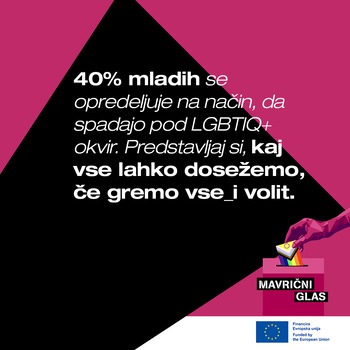
Rainbow Voice is an initiative of Ljubljana Pride that was launched to inform and support young rainbow voters in actively engaging in the 2022 triple elections.
In 2024, the European Parliament elections are taking place, and our goal remains the same: to make elections and their importance more accessible to voters and to highlight their direct and indirect impact on the lives of LGBTIQ+ people.
Elections are of vital importance for our rights, so let Rainbow Voice be the voice of our community! Follow our website and social media for election-related news, invitations to events as part of the Rainbow Europe project, information about your rights, and much more!
Don’t stay silent. Vote and make a difference..

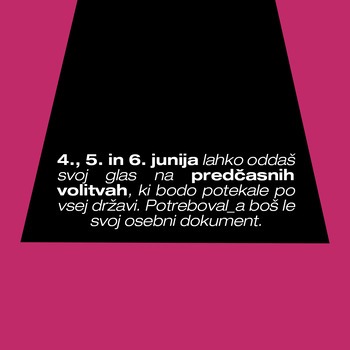
European Parliament elections take place every five years. The next elections will be held from 6 to 9 June 2024. At these elections, we vote for Members of the European Parliament (MEPs) who will represent the citizens of Slovenia during the next parliamentary term.
European elections are important for several reasons:
- They allow EU citizens to express their will and choose their representatives in the European Parliament. This strengthens the democratic process by giving people an opportunity to have an indirect say in policies and European legislation, which takes precedence over national legislation in EU Member States. European elections also allow people across the European Union to help shape the future of the EU.
- Elected MEPs make decisions on a wide range of issues, including the environment, trade, security, consumer rights, foreign relations, and many others. Elections give us the opportunity to choose representatives who will advocate for policies that we ourselves support.
- The European Parliament works together with the other two main EU institutions – the European Commission and the Council of the European Union. An elected Parliament helps maintain a balance between the institutions, contributing to preventing excessive concentration of power in the hands of particular groups.
- The European Parliament also participates in developing common responses to global challenges such as climate change, migration, terrorism, and economic stability.
ABOUT THE EUROPEAN PARLIAMENT
The European Parliament is an institution of the European Union that represents EU citizens. At the time of the 2019 European Parliament elections, it consisted of 705 Members who were directly elected. The number of seats allocated to each Member State depends on the size of its population. MEPs represent the citizens of their respective countries.
The European Parliament is a forum for political debate and decision-making at European level. MEPs adopt EU legislation, represent European citizens, and make decisions in areas such as the EU budget, human rights, and trade policy. They also ensure that the other EU institutions operate democratically.
The European Parliament’s monthly plenary sessions take place in Strasbourg, France, and are generally attended by all MEPs. Additional meetings, including committee meetings and administrative sessions, take place in Brussels, Belgium. Preparations for plenary sessions also generally take place in Brussels.
For the adoption of EU legislation in policy areas where the Council uses qualified majority voting, the European Parliament has equal responsibility with the Council. This covers approximately 95% of EU legislation. The Parliament and the Council also share responsibility for adopting the EU budget. The European Parliament must give its consent to all EU international agreements and to any EU treaty concerning enlargement.
The European Parliament also plays an important role in electing the President of the European Commission. It can vote to dismiss the Commission as a whole by adopting a motion of censure.
Official website of the European Parliament:
https://www.europarl.europa.eu/portal/en
Fabric European Union EU and Rainbow flags, concept picture about human rights
INSTITUTIONS OF THE EUROPEAN UNION
In addition to the European Parliament, the European Union has several other decision-making institutions.
EUROPEAN COMMISSION
The European Commission is a key institution of the European Union. It has the right of initiative for new EU legislation, which is then discussed and adopted by the European Parliament and the Council. The Commission also monitors the implementation of EU law, manages the EU budget, negotiates international agreements, and promotes common policies and objectives.
READ MORE
The European Commission is a key institution of the European Union. It has the right of initiative for new EU legislation, which is then discussed and adopted by the European Parliament and the Council. It also monitors the implementation of EU legislation, manages the EU budget, negotiates international agreements, and promotes common policies and objectives. If Member States fail to implement adopted regulations and directives, the Commission can bring infringement proceedings against them before the Court of Justice of the European Union, thereby requiring them to comply with EU law.
The Commission exercises its powers independently. As it represents the interests of the European Union as a whole, it must not follow instructions from any individual Member State.
The European Commission consists of one Commissioner from each EU Member State, including the President of the European Commission – a total of 27 Commissioners and the President. Commissioners are appointed for a five-year term by agreement between the Member States and following approval by the European Parliament. The President of the European Commission is elected by the European Parliament.
Official website of the European Commission: https://commission.europa.eu/index_en
EUROPEAN COUNCIL
The European Council is the highest-level political institution of the European Union. It sets the EU’s overall priorities and defines how they should be achieved. It also addresses issues on which the Council of the European Union (the Council of Ministers) cannot reach agreement, coordinates economic and security policies, and takes important decisions on strategic and long-term issues.
READ MORE
EUROPEAN COUNCIL
The European Council is the highest-level political institution of the European Union. It sets the EU’s overall objectives and how to achieve them, takes decisions on issues on which the Council of the European Union (the Council of Ministers) cannot reach agreement, coordinates economic and security policies, and makes important decisions on strategic and long-term matters.
It consists of the heads of state or government of the EU Member States and the President of the European Commission. It meets four times a year in Brussels, Belgium. The European Council has a President, who is elected by the European Council by a qualified majority for a two-and-a-half-year term, renewable once.
Official website of the European Council: https://www.consilium.europa.eu/en/european-council/
COUNCIL OF THE EUROPEAN UNION
The Council of the European Union, also known as the Council of Ministers, adopts EU legislation. It shares this responsibility with the European Parliament. The two institutions also share responsibility for adopting the EU budget. In addition, the Council concludes international agreements, which are negotiated by the European Commission.
READ MORE
The Council of the European Union, also known as the Council of Ministers, adopts EU legislation. It shares this responsibility with the European Parliament. The two institutions also share responsibility for adopting the EU budget. In addition, the Council concludes international agreements, which are negotiated by the European Commission.
In most cases, decisions are taken by a qualified majority, also known as a “double majority” (a decision must be supported by 55% of the Member States, representing at least 65% of the EU population). For more important matters, such as taxation, amendments to the Treaties, the introduction of a new common policy, or the accession of a new Member State, the Council must reach a unanimous decision.
The Council of Ministers is made up of ministers from the national governments of the EU Member States. Each Member State holds the Presidency of the Council for six months. Each meeting is attended by one minister from each Member State, depending on the topic being discussed.
Official website of the Council of the European Union: https://www.consilium.europa.eu/en/council-eu/
COURT OF JUSTICE OF THE EUROPEAN UNION
The Court of Justice ensures that EU law is respected and that the Treaties are correctly interpreted and applied. It is based in Luxembourg. The Court consists of judges from all EU Member States and eleven Advocates General. They are appointed by the governments of the Member States for renewable six-year terms.
Official website of the Court of Justice of the European Union:
https://curia.europa.eu/jcms/jcms/j_6/en/
EUROPEAN CENTRAL BANK
The European Central Bank is responsible for managing the EU’s monetary policy and the euro. Its main responsibilities are maintaining price stability and supervising banks in the euro area. The Governing Council of the European Central Bank consists of the President, the Executive Board members, and the governors of the national central banks of the euro area countries. The ECB is headquartered in Frankfurt, Germany.
Official website of the European Central Bank:
https://www.ecb.europa.eu/home/html/index.en.html
EUROPEAN COURT OF AUDITORS
The European Court of Auditors checks the legality and regularity of all EU revenue and expenditure and examines how the EU budget is managed. It is based in Luxembourg. It consists of one member from each EU Member State, appointed after consultation with the European Parliament and agreement between the Member States. Members serve six-year terms.
Official website of the European Court of Auditors:
https://www.eca.europa.eu/en